Disclosure: This article contains affiliate links. If you buy through them, I earn a small commission at no extra cost to you. I’m based in Japan and read these listings in my native language every day — that’s the entire reason this guide exists.
Last week I found a listing on Yahoo! Auctions for an old Daiwa Spinmatic. The title said: 超美品ジャンク — “chō-bihin janku.”
Translated literally, that’s “pristine-condition junk.”
If that sounds like a contradiction, congratulations — you’ve just discovered why so many overseas anglers overpay, or worse, receive a beautiful paperweight in the mail. The seller was saying: this reel looks mint, but I make zero promises about whether it works. A Japanese buyer reads that instantly. Most proxy-shopping buyers never see the warning at all.
Yahoo! Auctions (ヤフオク, “Yafuoku”) is the biggest treasure chest in fishing: discontinued lures, JDM-only reels, and used Stellas and Antares at prices that make US tackle forums weep. As I write this, a search for used Shimano reels in “excellent condition” returns over 1,100 live listings — Stellas, Antares DCs, Calcutta Conquests, Vanquishes. But everything is in Japanese, and the difference between a bargain and a brick often comes down to two or three characters in the title.
This glossary covers every term you actually need. All examples below are taken from real listings I pulled this week.
Start with the official condition filter (most buyers miss this)
Before you learn any vocabulary, know this: Yahoo! Auctions has an official six-grade condition system that sellers must choose from. It appears as a search filter, so you can exclude the worst grades before you read a single word of Japanese.
| Japanese | Meaning |
|---|---|
| 未使用 | Unused |
| 未使用に近い | Nearly unused |
| 目立った傷や汚れなし | No noticeable scratches or dirt |
| やや傷や汚れあり | Some scratches or dirt |
| 傷や汚れあり | Visible scratches or dirt |
| 全体的に状態が悪い | Poor condition overall |
Real example from this week: a Daiwa 15 Saltiga 6500H listed under やや傷や汚れあり (“some scratches”) at ¥49,280 — an honest mid-grade listing, correctly categorized.
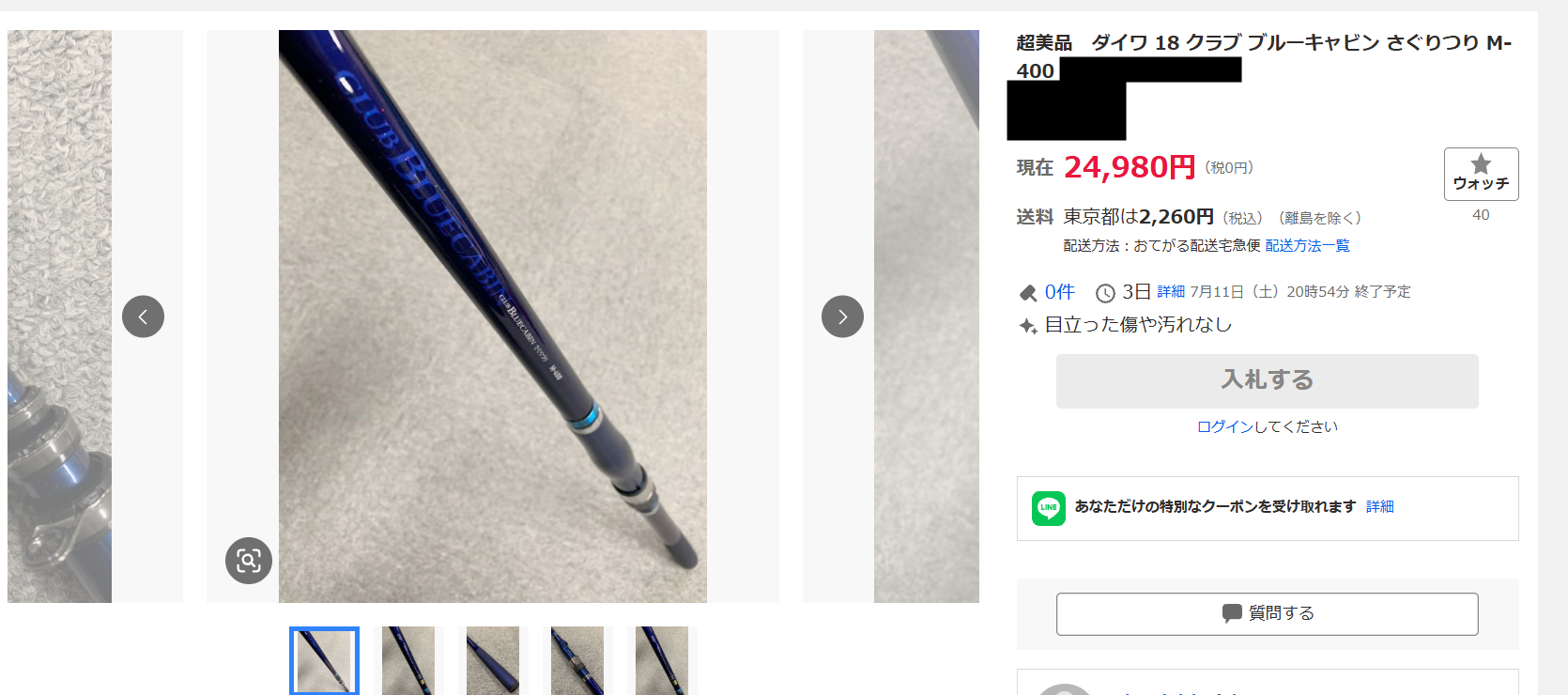
A real listing: the title shouts 超美品 (“near mint”), but the official grade badge below the price says 目立った傷や汚れなし — “no noticeable scratches,” which is grade 3 of 6, not 2. Always check both.
The catch: this grade is still self-reported, and it says nothing about mechanical condition. A reel can be “no noticeable scratches” on the outside and grind like a coffee mill inside. That’s what the rest of this glossary is for.
The praise ladder: how sellers say “it’s clean”
Japanese sellers describe cosmetic condition with a ladder of increasingly enthusiastic terms. From top to bottom:
| Japanese | Romaji | What it claims |
|---|---|---|
| 極上美品 | gokujō bihin | Absolute top mint |
| 極美品 / 超美品 | goku-bihin / chō-bihin | Near mint |
| 美品 | bihin | Excellent condition |
| 中古美品 | chūko bihin | Used but excellent |
Real examples: 「シマノ 22ステラC2000S 超美品」 (Shimano 22 Stella C2000S, near mint), 「極上美品 シマノ 20 メタニウム XG」 (top-mint 20 Metanium XG).
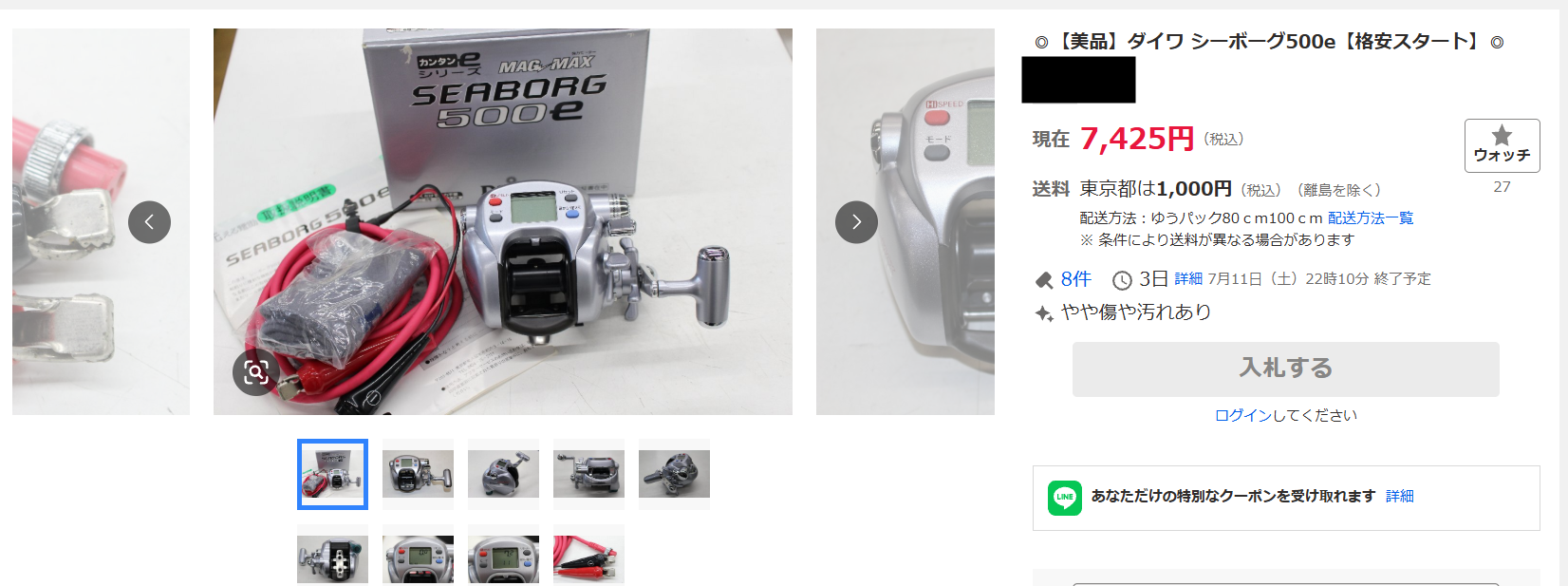
The gap in action: this Daiwa Seaborg 500e is titled 【美品】 (“excellent”), yet the official grade reads やや傷や汚れあり — “some scratches or dirt.” The title is marketing; the badge is the seller’s official answer.
Two supporting phrases raise my confidence in a listing:
- 一回使用のみ (ikkai shiyō nomi) — “used only once.” Example: an Exsence DC SS XG listed as 一回使用のみ 美品.
- 数回使用 (sūkai shiyō) — “used a few times.”
None of this is verifiable, but sellers who bother to state usage count tend to be hobbyists selling their own gear — my favorite kind of seller. Which brings us to the dark side.
The warning words: read these or get burned
This is the section to bookmark. Every term below appeared in live listings this week.
| Japanese | Romaji | What it really means |
|---|---|---|
| ジャンク / ジャンク品 | janku | “Junk / for parts.” No guarantee it works. No returns. |
| ジャンク扱い | janku atsukai | “Treated as junk” — might work, might not, seller won’t promise |
| 動作未確認 | dōsa mikakunin | “Operation untested” — seller never tried it |
| 未検品 | mikenpin | “Uninspected” — seller hasn’t even looked |
| 現状品 / 現状渡し | genjō-hin / genjō watashi | “Sold as-is” |
| 通電のみ確認 | tsūden nomi kakunin | “Confirmed it powers on” — and nothing else (electric reels) |
| 液晶不良 | ekishō furyō | “LCD defect” (electric reels) |
| 長期保管品 | chōki hokan-hin | “Long-term storage item” — expect dried grease, maybe corrosion |
| まとめ売り | matome-uri | Bulk lot — junk usually hiding inside |
| ノークレーム・ノーリターン | nō kurēmu nō ritān | “No claims, no returns” — boilerplate in most descriptions |
| 訳あり | wake-ari | “With issues” — the seller admits something is wrong. The description says what; read it (or ask me in the comments) |
| 返品不可 | henpin fuka | “No returns accepted” |
Real examples: 「PENN SENATOR 113HLW 動作未確認、ジャンク」 (operation untested, junk), 「シーボーグ500J ジャンク品 液晶不良」 (Seaborg 500J, junk, LCD defect), 「タナセンサーS ジャンク 通電のみ確認」 (powers on, that’s all we know).
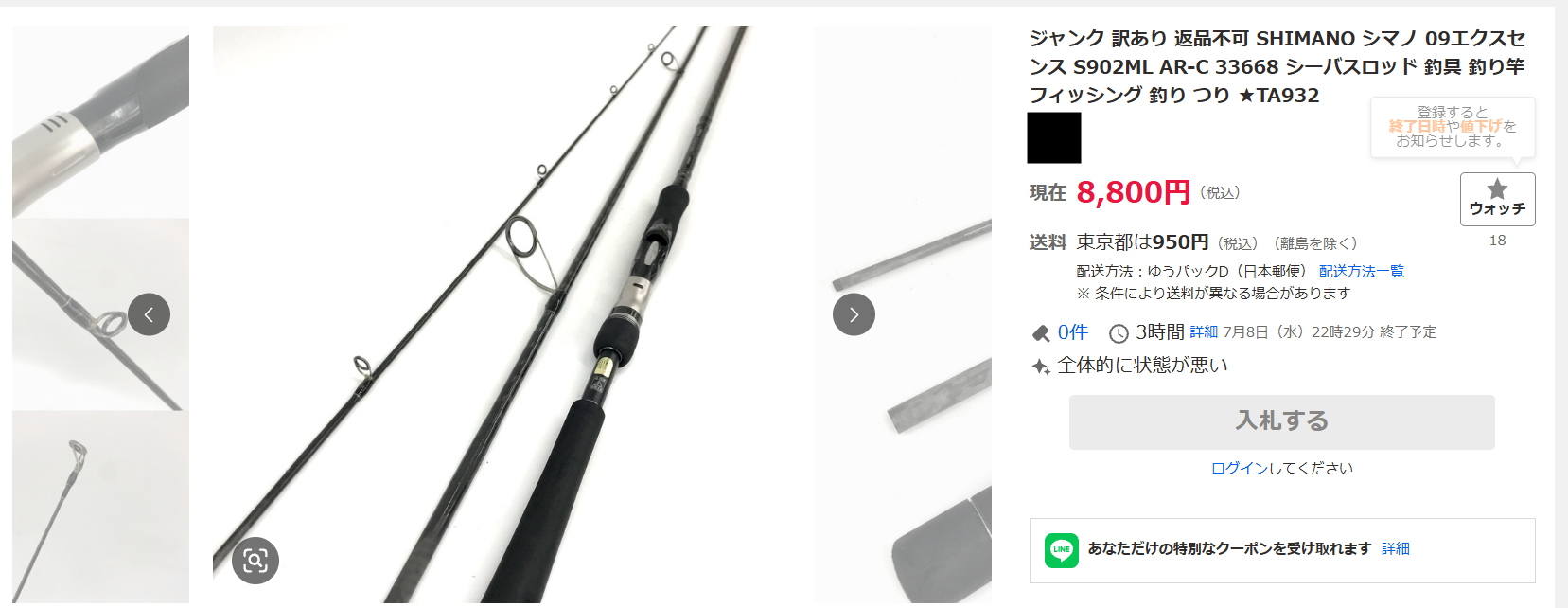
The full combo: ジャンク (junk) + 訳あり (with issues) + 返品不可 (no returns) in one title, plus the lowest official grade 全体的に状態が悪い (“poor condition overall”). At least this seller is honest — this is what maximum risk looks like, clearly labeled.
The nuance worth money: ジャンク扱い (“treated as junk”) is different from ジャンク (“junk”). Sellers use it defensively — a shop that can’t test every trade-in labels everything ジャンク扱い. Perfectly working reels hide in this category, priced like broken ones. It’s the highest-risk, highest-reward zone on the site. If you can’t afford to lose the money, stay out. If you can, it’s where the legendary deals live.
And yes — 超美品ジャンク, “pristine junk,” now makes sense: looks perfect, zero mechanical guarantee.
Parts, accessories, and spec words
| Japanese | Romaji | Meaning |
|---|---|---|
| 純正 | junsei | Genuine / OEM part |
| 社外 | shagai | Aftermarket part |
| 替えスプール | kae supūru | Spare spool (watch out — spool-only listings look like reel listings in search results) |
| 箱付 / 元箱付 | hako-tsuki / motobako-tsuki | With (original) box |
| 夢屋 | Yumeya | Shimano’s official custom-parts brand |
| 左ハンドル / 右ハンドル | hidari / migi handoru | Left / right handle |
| 左巻き / 右巻き | hidari / migi-maki | Left / right retrieve (same thing, casual) |
| ベアリング追加 | bearingu tsuika | Extra bearings added — i.e., modified |
| リール袋 | rīru-bukuro | Reel pouch (affects resale value on flagship reels) |
Real example: 「シマノ純正 17エクスセンスDC用 スペアスプール」 — a genuine Shimano spare spool for the 17 Exsence DC. If you search “Exsence DC” and sort by price, listings like this are why the “cheapest” result is sometimes just a spool.
Auction mechanics and shipping terms
| Japanese | Romaji | Meaning |
|---|---|---|
| 現在 | genzai | Current bid |
| 即決 | sokketsu | Buy-it-now price |
| 1円スタート | ichi-en sutāto | 1-yen starting price (it will not end at 1 yen) |
| 入札 | nyūsatsu | Number of bids |
| ウォッチ | wotchi | Watch count — a popularity signal |
| 落札相場 | rakusatsu sōba | Past sold prices — check these before bidding |
| 送料無料 | sōryō muryō | Free domestic shipping only |
| 送料未定 | sōryō mitei | Shipping cost TBD — you find out after winning |
| 同梱不可 | dōkon fuka | Cannot combine shipping with other items |
| ストア / 個人 | sutoa / kojin | Store seller / individual seller |
| 鑑定付き | kantei-tsuki | Covered by Yahoo’s authentication service |
One trap worth repeating: 送料無料 (free shipping) means free shipping to the proxy warehouse in Japan. International shipping is a separate cost through your proxy service. And 送料未定 (shipping TBD) plus a heavy electric reel can add an unpleasant surprise on top.
The 60-second checklist
Before bidding on any used reel, run through this:
- Filter first — set the official condition filter to exclude the bottom two grades.
- Scan the title for warning words — ジャンク, 動作未確認, 現状 anywhere in the title changes everything.
- Check what you’re actually buying — reel, or just a 替えスプール (spare spool)?
- Confirm the handle side — 左 (left) / 右 (right) for baitcasters.
- Check 落札相場 (sold prices) before you decide what “cheap” means.
- Ask the seller about mechanical condition if the description doesn’t mention it. (Coming soon: my copy-paste Japanese question templates — the exact sentences to send.)
Ready to actually buy?
Yahoo! Auctions doesn’t ship internationally and requires a Japanese address, so overseas buyers go through proxy services. I’ve written a full step-by-step walkthrough for that — including how bidding through a proxy works and what the real total cost looks like: [How to Buy Fishing Tackle from Japan with ZenMarket & Buyee →] (internal link to Article 5)
Or dive straight in: [Browse used Shimano reels on Yahoo! Auctions via ZenMarket] (affiliate link)
Questions about a specific listing? Drop the title in the comments — reading these is literally my day job. / I post finds and translation help regularly; bookmark this glossary, you’ll need it at 2 a.m. during a bidding war.